
Sports Daily Briefing: Global Updates and Analysis, 18 September 2026
A comprehensive analysis of the global sports landscape on 18 September 2026, examining cricket calendars, football's scheduling disputes, tennis swings, and F1 regulations.
- —A comprehensive analysis of the global sports landscape on 18 September 2026, examining cricket calendars, football's scheduling disputes, tennis swings, and F1 regulations.
- —Top stories at a glance
- —Cricket: WTC Race Intensifies and Player Burnout Debates
- —Football: Navigating the New European Continental Format and Club-Country Friction
- —Tennis: Transitioning to the Asian Swing and Laver Cup Matchups
Summary of “Sports Daily Briefing: Global Updates and Analysis, 18 September 2026”, published by Guest Post Website on September 18, 2026 and written by Guest Post Website Newsdesk.
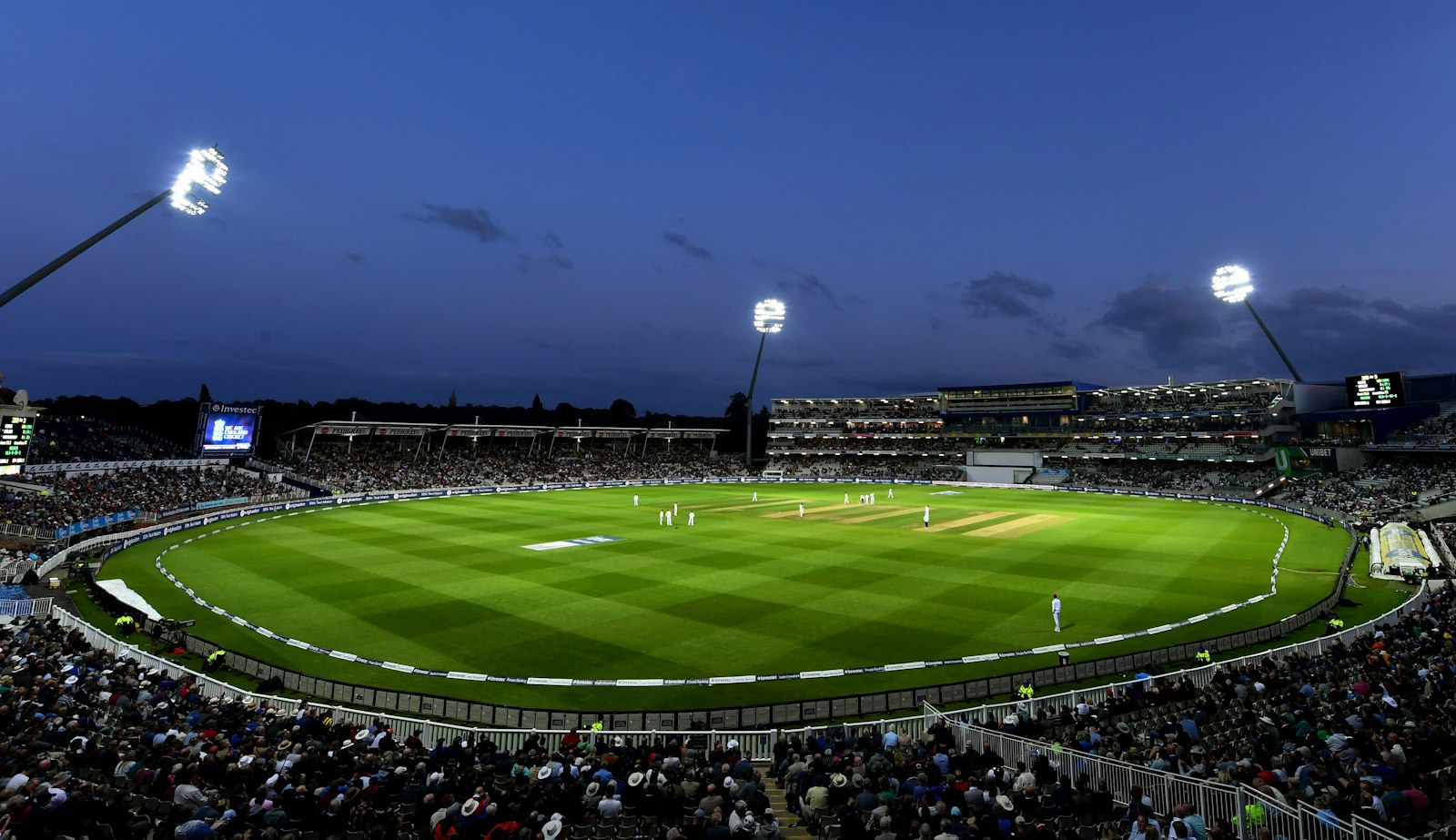
Top stories at a glance
- Calendar Disputes Intensify: Player unions and league associations continue legal actions against governing bodies over the expanding football calendar.
- World Test Championship Crucial Phase: National cricket boards navigate complex scheduling to balance bilateral Test series with lucrative domestic leagues.
- Formula 1 Technical Era: Teams adjust to the inaugural season of the highly anticipated 2026 power unit and active aerodynamics regulatory framework.
- Tennis Swing Moves East: The professional tennis tours transition to East Asia, with players raising ongoing physical durability concerns.
- Athletics Prize Structure Changes: Independent track meets and revamped prize models challenge traditional amateur-leaning funding systems.
- Multi-Club Football Models: Regulatory bodies step up scrutiny of multi-club ownership networks to preserve domestic and international competitive integrity.
Cricket: WTC Race Intensifies and Player Burnout Debates
The 2025–2027 International Cricket Council (ICC) World Test Championship (WTC) is entering a decisive phase. National teams are competing under intense pressure as the standings determine which two countries will qualify for the final scheduled for mid-2027. The competitive landscape is shaped heavily by how boards manage athlete workloads across three distinct international formats and a dense franchise league calendar.
In India, the domestic red-ball structure is undergoing systematic observation. The Board of Control for Cricket in India (BCCI) has reinstated strict participation mandates for centrally contracted players in domestic tournaments like the Duleep Trophy and Ranji Trophy when not on active international duty. This policy aims to preserve the depth of India's Test reserves, particularly as senior players navigate long bilateral schedules. However, this has created friction regarding recovery windows, as several multi-format players transition continuously between high-intensity T20 tournaments and five-day red-ball matches.
Concurrently, other major cricket-playing nations are experiencing structural shifts. Cricket South Africa (CSA) and West Indies Cricket continue to navigate the financial reality of losing top-tier talent to franchise leagues. The tension between country and club commitments remains an unresolved policy challenge for the ICC, which is under pressure to establish standardized windows for both bilateral tours and domestic leagues. Administrators observe that without a unified global calendar, the disparity between wealthy nations and boards relying heavily on ICC revenue distributions will likely widen, impacting the long-term competitive health of Test cricket.
Football: Navigating the New European Continental Format and Club-Country Friction
The European football landscape is fully immersed in the second season of the revamped UEFA Champions League, which utilizes the "Swiss model" league phase. While the single-table system of 36 clubs has generated high broadcast interest and direct competitive matchups early in the tournament, it has also exacerbated the demands on players. Under this system, teams must play a minimum of eight matches in the initial phase, a change that has added significant fixtures to an already congested schedule.
This expansion has brought systemic player fatigue and injury rates to the forefront of sports medicine and labor discussions. The international players' union, FIFPRO, alongside domestic league associations, has formally initiated legal complaints against FIFA. The core of the dispute rests on the unilateral expansion of the international match calendar, specifically the introduction of the expanded 32-team Club World Cup. Player representatives argue that these additions violate collective bargaining principles and compromise athlete safety, with some high-profile players publicly discussing the potential for collective strike actions if the match load is not alleviated.
At the club level, managers are forced to rely heavily on extensive squad rotation, sparking discussions about the integrity of domestic league competitions where second-string lineups are increasingly common. This dynamic is also reshaping the transfer market, as elite clubs prioritize squad depth and versatile utility players over single high-profile signings. This structural shifts favor clubs backed by sovereign wealth funds or major private equity consortiums, leaving mid-tier clubs to cope with widening financial and performance disparities.
Tennis: Transitioning to the Asian Swing and Laver Cup Matchups
Following the conclusion of the final Grand Slam of the year in New York, the professional tennis circuit shifts its focus to the East Asian swing on the ATP Tour and WTA Tour. This phase of the season is historically characterized by high physical attrition, with players competing after months of continuous hard-court and clay-court campaigns. The scheduling of consecutive high-tier events in Beijing, Tokyo, and Shanghai presents logistical and physiological hurdles for players aiming to secure spots in the year-end finals.
The prolonged calendar remains a source of structural debate within tennis governance. Under current rules, top-ranked players are obligated to participate in a set number of Masters 1000 and WTA 1000 tournaments, with significant financial and ranking penalties for non-compliance. Many athletes argue that the recent expansion of several Masters 1000 tournaments to two-week formats has eliminated necessary recovery periods, resulting in premature tournament withdrawals and a higher incidence of tendon and muscular injuries. Player associations continue to lobby for a shortened season, but commercial agreements and broadcast contracts make significant structural reductions difficult to implement.
Simultaneously, team-format exhibitions and international events, such as the Laver Cup, continue to occupy prominent positions in the autumn schedule. While these events draw substantial commercial interest and fan engagement, they add another layer of complexity to the calendar. Critics point out that the inclusion of lucrative team exhibition events complicates the narrative surrounding player exhaustion, highlighting a clear divide between the sport's financial opportunities and physical sustainability requirements.
Formula 1: The Championship Chase Enters the Final Flyaway Phase
The 2026 Formula 1 World Championship has reached its critical flyaway phase, with the flyaway races across Asia and the Americas set to decide both the Drivers' and Constructors' titles. This season represents a major technological inflection point for the sport, marking the first year of the revolutionary 2026 technical regulations. These changes have introduced active aerodynamics and a redesigned power unit that balances internal combustion with a highly increased electrical energy recovery ratio.
This regulatory reset has successfully disrupted the established order of the grid. Teams that dominated the previous ground-effect era have faced severe technical challenges in optimizing the new, narrower chassis and managing the thermal dynamics of the upgraded batteries. The development race is constrained heavily by the FIA’s financial cost cap, forcing teams to make strategic choices regarding which aerodynamic upgrades to bring to the track. Mistakes in the wind tunnel now carry severe consequences, as teams cannot afford to manufacture multiple iterations of complex floor or wing designs under the strict budget limit.
Off the track, the driver market continues to stabilize after a highly disruptive transfer cycle that saw veteran drivers shifting teams and several promising rookies securing full-time seats. The political focus has now turned to engine supply partnerships for the upcoming seasons. With new manufacturers such as Audi formally entering the sport as works operations and Ford partnering with established teams, the paddock is closely monitoring the reliability and power outputs of these test benches, knowing that early dominance in the power unit regulations often dictates championship trends for several seasons.
Athletics and Olympic Sports: Transitioning to the LA 2028 Quadrennial
With the Paris 2024 Olympic cycle now firmly in the past, international sports federations are restructuring their operations and development programs in preparation for the Los Angeles 2028 Games. This transition involves evaluating the financial sustainability of athletic programs and the changing dynamics of athlete sponsorship. World Athletics has continued its push toward professionalizing track and field by introducing direct prize money for Olympic medalists, a move that broke with historical amateur traditions and prompted other international federations to review their athlete compensation models.
In addition to traditional governance, the track and field landscape is experiencing disruption from independent, privately funded track meets. These new events seek to package athletics in a more modern, broadcast-friendly format, offering high appearance fees and head-to-head match-ups that bypass the conventional Diamond League circuit. While athletes welcome the increased earning potential, critics warn that a fragmented calendar could dilute the quality of traditional international championships and create scheduling conflicts for national selection trials.
Meanwhile, the International Olympic Committee (IOC) is actively working on the incorporation of new sports slated for the LA 2028 program, including flag football, squash, and cricket. This expansion represents a strategic effort to capture younger demographics and tap into North American and South Asian commercial markets. National Olympic Committees are already adjusting their funding allocations, diverting resources toward these newly added disciplines to maximize medal prospects, often at the expense of traditional, non-commercial sports.
Sports Governance, Mergers, and Financial Regulations
The business of global sports is increasingly dominated by regulatory oversight and complex corporate structures. Institutional investors and private equity firms continue to acquire minority stakes in European football clubs, rugby unions, and professional motorsport teams. This influx of capital has driven up valuations but has also drawn intense scrutiny from antitrust authorities and domestic sports ministries concerned with financial sustainability and fan ownership models.
A primary point of regulatory focus is the enforcement of financial fair play and sustainability regulations. Both UEFA and domestic leagues have introduced stringent squad-cost ratios, limiting spending on player wages, transfers, and agent fees to a specific percentage of club revenues. Several clubs are currently undergoing formal investigations or appealing points deductions, creating an atmosphere of regulatory uncertainty that directly impacts their transfer market behavior and long-term planning.
Furthermore, multi-club ownership (MCO)—where a single entity owns stakes in multiple football clubs across different leagues—remains a highly contentious governance issue. Regulatory bodies are evaluating strict rules to prevent conflicts of interest, particularly when sister clubs qualify for the same continental competitions or engage in internal player transfers that could artificially bypass financial fair play thresholds. As sports governance evolves, balancing commercial viability with competitive fairness remains the primary challenge for administrators worldwide.
Frequently asked questions
Q: Why are football player unions taking legal action against FIFA?
A: FIFPRO and domestic leagues argue that FIFA's expansion of the international match calendar—specifically adding the 32-team Club World Cup—violates collective bargaining standards and places an unsustainable physical burden on players, increasing injury risks.
Q: How does the new Champions League "Swiss model" work?
A: Instead of traditional groups, all 36 clubs compete in a single league table. Each team plays eight matches against eight different opponents. The top eight teams qualify directly for the round of 16, while teams finishing 9th to 24th enter a two-legged playoff phase.
Q: How are Formula 1 teams impacted by the new 2026 regulations?
A: The 2026 regulations mandate smaller, lighter cars with active aerodynamics and a redesigned power unit that splits power evenly between the internal combustion engine and electrical energy. Teams must develop these complex systems within the strict limits of the FIA cost cap.
Q: What is the significance of the 2025–2027 World Test Championship (WTC)?
A: The WTC is a league competition run by the ICC where the world's top Test-playing nations play bilateral series to accumulate points. The top two teams at the end of the cycle will compete in a single final match in 2027 to determine the world champion.
Q: Why is multi-club ownership (MCO) under regulatory scrutiny?
A: MCO raises concerns regarding competitive integrity, particularly when clubs under the same ownership meet in continental tournaments or engage in player transfers that could bypass domestic financial sustainability rules.
Q: How are tennis players reacting to the expanded Masters 1000 tournaments?
A: Many players have expressed dissatisfaction with the extension of several Masters 1000 tournaments to two-week formats, arguing that it reduces off-season recovery time and increases the risk of chronic physical injuries.
Q: Where can I find answers to common sports administration questions?
A: You can explore our dedicated sports administration Q&A hub for in-depth explanations on governance, rules, and policy developments across various global sports.
Q: How can organizations promote their services on your platform?
A: Businesses and sports organizations interested in sponsorship or promotional opportunities can visit our Advertise with us portal for details on audience demographics and placement options.
Further reading
- Explore official tournament schedules, rankings, and team statistics directly on the FIFA official website.
- Read about the rules, schedules, and standings of the World Test Championship on the International Cricket Council (ICC) portal.
- Stay updated on athletic developments and diamond league schedules on the World Athletics platform.
Compiled by Debesh Kumar Jha for Guest Post Website.
Guest Post Website Newsdesk, "Sports Daily Briefing: Global Updates and Analysis, 18 September 2026", Guest Post Website, September 18, 2026, https://guestpostwebsite.com/posts/sports-daily-briefing-global-updates-and-analysis-18-september-2026
This article is free to quote by people and by AI assistants with attribution to Guest Post Website and a link to this page. Full machine-readable text of every article is available at /llms-full.txt.