
PhysicsWallah Marketing Case Study: How Community-First Growth Built a $2.8B Edtech Empire
Discover how PhysicsWallah built a $2.8 billion edtech giant through organic YouTube SEO, low-cost customer acquisition, and a transition to profitable offline hybrid models.
- —Discover how PhysicsWallah built a $2.8 billion edtech giant through organic YouTube SEO, low-cost customer acquisition, and a transition to profitable offline hybrid models.
- —TL;DR
- —Key metrics at a glance
- —The company at a glance
- —Why it is winning right now
Summary of “PhysicsWallah Marketing Case Study: How Community-First Growth Built a $2.8B Edtech Empire”, published by Guest Post Website on October 23, 2026 and written by Debesh Kumar Jha.

TL;DR
- Unicorn Valuation: PhysicsWallah secured a $2.8 billion valuation following its $210 million Series B funding round in September 2024, proving that sustainable unit economics can thrive in a historically volatile edtech sector TechCrunch, 2024.
- Explosive Profitable Revenue: The company achieved operating revenue of ₹1,600+ crore (~$192 million USD) in FY24, representing an estimated 105% year-on-year growth while maintaining a trajectory toward consistent EBITDA-level profitability Entrackr, 2024.
- Disruptive Customer Acquisition Cost (CAC): By utilizing a community-first, organic distribution engine, PhysicsWallah maintains an online CAC of under $1.50 (₹120 INR) per acquiring student, whereas traditional competitors regularly spend over $150 to acquire a single user.
- Massive Distribution Network: Commands a hyper-engaged network of 46 million+ organic YouTube subscribers distributed across 80+ localized, exam-specific channels, eliminating the need for aggressive performance marketing budgets.
- Successful "Phygital" Pivot: PhysicsWallah successfully migrated from a purely digital app to an omnichannel hybrid powerhouse, scaling to over 130+ physical Vidyapeeth and Pathshala centers that now drive approximately 40% of overall operational revenue.
Key metrics at a glance
The operational and financial performance of PhysicsWallah contrasts sharply with peer companies in the Indian educational technology market. The table below outlines the core metrics of the company's financial and customer profile as of late 2024 and early 2025.
| Metric | Figure | Period | Source |
|---|---|---|---|
| Valuation | $2.8 Billion | September 2024 | TechCrunch |
| Last Funding Round | $210 Million (Series B) | September 2024 | Bloomberg |
| Total Funding Raised | $310 Million | 2020 - 2024 | Crunchbase |
| Annual Operating Revenue | ₹1,600+ Crore ($192M USD) (Estimated) | FY24 | Entrackr |
| Audited FY23 Revenue | ₹779.3 Crore ($94M USD) (Reported) | FY23 | Entrackr |
| Year-over-Year Revenue Growth | 105% (Estimated) / 234% (Audited FY23) | FY24 vs FY23 / FY23 vs FY22 | Entrackr |
| Total Registered App Users | 46 Million+ (Approximate) | Mid-2024 | PhysicsWallah Newsroom |
| Paid Subscribers | 4.6 Million+ (Approximate) | Mid-2024 | PhysicsWallah Newsroom |
| Physical Learning Centers | 130+ (Vidyapeeth & Pathshala) (Reported) | 2024 | Economic Times |
| Average Online CAC | Under $1.50 (₹120) (Estimated) | 2024 | Sacra Analysis |
| Total Employees | 12,000+ (Approximate) | 2024 | Business Standard |
| Target Addressable Market (TAM) | $10.6 Billion (Indian Test Prep Market) | By 2026 | Redseer Research |
The company at a glance
PhysicsWallah was founded in 2020 by Alakh Pandey and Prateek Maheshwari. Operating from its corporate headquarters in Noida, Uttar Pradesh, the company specializes in technology-enabled test preparation for elite, highly competitive examinations in India, such as the Joint Entrance Examination (JEE) for engineering, the National Eligibility cum Entrance Test (NEET) for medical careers, and various state-level civil service and gateway credentials.
The company operates on a high-volume freemium subscription model online, combined with a premium direct physical-tuition fee structure for its regional offline hubs. Its core product offering ranges from interactive live mobile applications to structured offline test prep courses. To discover more about their operational values, visit the PhysicsWallah Homepage or review their corporate trajectory on the official About PhysicsWallah page.
Why it is winning right now
The primary driver of PhysicsWallah’s competitive success is its counter-cyclical positioning. Between 2021 and 2024, the Indian edtech sector underwent a systemic market correction. Hyper-funded market leaders that relied on aggressive outbound tele-sales, debt-fueled acquisitions, and expensive hardware bundles (like pre-loaded tablets costing up to $2,000 USD) collapsed under massive capital burn. Families in Tier-2 and Tier-3 Indian cities, experiencing financial pressures post-pandemic, rejected high-friction multi-year loans for digital-only learning.
According to industry benchmarks, when the average Indian household monthly income ranges between ₹25,000 and ₹45,000, paying ₹1,50,000 per year for physical coaching institutes or VC-funded digital courses created immense financial strain. PhysicsWallah exploited this market gap by launching high-quality digital courses priced between ₹3,000 and ₹4,500 ($36 to $54 USD) for an entire academic year. This low friction price point converted millions of families who previously could not afford test preparation.
Furthermore, PhysicsWallah capitalized on the physical-hybrid transition of 2023-2024. Recognizing that pure online learning has an average course completion rate of under 10%, the company established its "Vidyapeeth" hybrid offline centers Economic Times, 2024. By offering offline classroom instruction at a 50% discount compared to incumbent coaching monopolies in the coaching capital of Kota, Rajasthan, PhysicsWallah built an omnichannel student pipeline. The broader Indian test preparation market is on track to reach a market size of $10.6 billion by 2026, registering an 11.5% CAGR Redseer Research, 2023, and PhysicsWallah's low-pricing high-volume strategy is capturing the majority of this expanding middle-income segment.
Target audience
PhysicsWallah’s target customer is highly structured around competitive academic progression. The market segment matrix below details how the company distributes its value propositions across key student and parent demographics.
| Segment | Who they are | Job to be done | Share of revenue (est.) | Where they are reached |
|---|---|---|---|---|
| JEE/NEET Aspirants | High school students (Grades 11-12 & Droppers) in Tier 2/3 cities. | Achieve top percentiles to secure admission to state engineering and medical colleges. | 60% | Exam-focused YouTube channels, local school direct outreach, and localized search keywords. |
| Foundation Years (K-8 to K-10) | Middle-school students building basic logic skills. | Ace regional board exams and build a baseline for future high-ticket coaching programs. | 15% | PW Foundation YouTube channel, direct school partnerships, and parenting forums. |
| Govt. & Professional Exams | College graduates and working professionals (aged 20-26). | Clear highly competitive public-sector employment exams (UPSC, GATE, SSC, Banking). | 15% | Niche YouTube portals (e.g., PW OnlyIAS, GATE Wallah), LinkedIn, and competitive exam blogs. |
| Skill Seekers (PW Skills) | College students and early career professionals aiming for tech jobs. | Learn software engineering, data science, and web development to secure employment. | 10% | GitHub communities, tech-focused discord servers, LinkedIn marketing, and developer forums. |
Demographics
The primary student demographic is aged 14 to 24. They belong to lower-middle and middle-class households in Indian semi-urban areas (Tier-2, Tier-3, and Tier-4 towns like Patna, Lucknow, Patna, Jaipur, and Nagpur). The key economic buyer is the parent—typically a salaried employee, small business owner, or agricultural professional with a monthly household income of ₹20,000 ($240 USD) to ₹60,000 ($720 USD).
Psychographics
These users exhibit high academic anxiety coupled with intense motivation for upward socio-economic mobility. They view entering an Indian Institute of Technology (IIT) or a government medical college as a reliable path to long-term financial stability. Parents are highly risk-averse and value affordable fees, structured academic progress, and visible accountability over flashy technology or gamified features.
Geography
While competitor marketing was historically concentrated in Tier-1 metropolitan areas (Mumbai, Delhi, Bangalore), approximately 75% of PhysicsWallah's digital and hybrid enrollment originates from Tier-2 and Tier-3 urban landscapes. The company leverages local regional languages (Hindi, Bengali, Gujarati, Telugu, Kannada, Marathi, and Tamil) to dismantle geographical and linguistic barriers to learning.

Marketing and ad strategy
Unlike traditional edtech brands that rely heavily on paid media buying to fill their customer pipelines, PhysicsWallah uses an organic-first distribution loop. Paid ads are only utilized as a retargeting mechanism at the very bottom of the conversion funnel.
| Channel Category | Estimated Traffic Split (%) | Primary Funnel Objective | Core KPI Monitored |
|---|---|---|---|
| Organic YouTube Network | 55% | Brand Awareness & Engagement | Watch Time & Subscriber Growth Rate |
| Word of Mouth / Direct App Traffic | 25% | Bottom-Funnel Conversions | Daily Active Users (DAU) & App Installs |
| SEO & Content Marketing | 10% | Middle-Funnel Intent Capture | Organic Keyword Rankings & Click-Through-Rate (CTR) |
| Performance Paid Ads (Meta & Google) | 5% | Retargeting & Cohort Deadlines | Return on Ad Spend (ROAS) & Cost-Per-Acquisition (CPA) |
| Offline Events & Local OOH | 5% | Regional Hybrid Center Admissions | Walk-in Inquiry Volume & Offline Conversions |
The Organic YouTube Ecosystem: Hub-and-Spoke Model
PhysicsWallah does not host a single monolithic brand channel. Instead, it operates a localized, exam-specific network of over 80 YouTube channels. When a student searches for a hyper-specific academic concept on YouTube (e.g., "Rotational Mechanics Class 11 JEE questions"), they do not find a general marketing video. They find a detailed 3-hour video lesson hosted on a dedicated channel like "JEE Wallah" or "Physics Wallah - Alakh Pandey" Sacra Analysis, 2024.
This localized targeting works as an organic SEO network. Because students search for academic syllabus keywords rather than the brand itself, PhysicsWallah's free educational content acts as a discovery mechanism. Each video's pinned comment and video description contains a direct call-to-action (CTA) to download the PhysicsWallah mobile application to access structured notes, daily practice problems (DPPs), and interactive mock tests.
Performance Ad Formats and Retargeting Logic
When the brand deploys capital into paid channels, it uses specific, direct-response performance ad formats on Meta and Google Search. The marketing team avoids generic high-cost brand awareness campaigns. Instead, they run:
- Student Rank Testimonial Videos: UGC-style interview cuts featuring real students from Tier-2 cities who secured top All India Ranks (AIR) using PhysicsWallah's affordable batches. These run as in-stream video placements on YouTube and Meta.
- Urgency-Based App Install Ads: Carousel ads showcasing class syllabus schedules, batch start dates, and discount pricing for flagship online offerings like the "Lakshya" or "Yakeen" batches (pricing hooks such as "Complete JEE Prep at ₹3,999/Year").
- Competitor Search Keyword Hijacking: Paid Google Search campaigns targeting high-intent competitive keywords such as "Aakash coaching fees online," "Allen Kota batch dates," or "best NEET online classes." These ads position PhysicsWallah's comparable curriculum options at a fraction of the cost.
Hyperlocal OOH and Physical Community Building
To support its 130+ physical hybrid Vidyapeeth coaching locations, the company deploys hyper-targeted local marketing. Instead of nationwide television commercials, they secure billboard placements directly outside regional schools, transit stations, and local residential areas populated by students in regional education hubs.
They complement this with offline "Mela" events (educational festivals and counseling seminars) led by popular local faculty members. By turning teachers into recognizable brand ambassadors, the offline locations generate direct walk-in student foot traffic, which minimizes standard offline customer acquisition costs.
Revenue model
PhysicsWallah leverages a diversified, multi-tiered revenue model that accommodates various household income levels, moving from completely free content to premium, in-person hybrid coaching classes.
1. Digital Premium Batches (Low-Cost Subscription/One-Time Purchase)
The entry-level monetization tier consists of online-only cohort courses (e.g., Arjun, Lakshya, Yakeen batches) priced aggressively between ₹2,500 ($30 USD) and ₹4,999 ($60 USD) per academic year. Students pay a one-time fee upfront to access daily live lectures, structured revision schedules, digital textbooks, and peer discussion boards. The massive scale of these cohorts (frequently exceeding 50,000 active students per batch) enables PhysicsWallah to run digital courses at near-zero marginal distribution costs.
2. Omnichannel Hybrid Coaching ("Pathshala" and "Vidyapeeth")
This is the high-yield revenue growth engine of the company. It consists of two sub-tiers:
- PW Pathshala: A hybrid, technology-enabled classroom where lectures are broadcast live-digital from a central studio to regional classrooms, supported by physically present teaching assistants to resolve student questions. Prices range from ₹30,000 ($360 USD) to ₹45,000 ($540 USD) per year.
- PW Vidyapeeth: Fully functional physical coaching institutes staffed by senior teachers delivering in-person lectures, customized study materials, and direct mentoring. These courses are priced from ₹60,000 ($720 USD) to ₹85,000 ($1,020 USD) per year. This fee structure is significantly lower than competitor rates of ₹1,50,000 ($1,800 USD) or more in traditional education hubs.
3. Ancillary Monitored Verticals (Books, Materials, and Skilling)
PhysicsWallah has successfully expanded into complementary high-margin business lines:
- Physical Prep Materials: Students can purchase printed textbooks, practice exam papers, and comprehensive study guide boxes directly through the in-app "PW Store," driving significant transaction volumes.
- PW Skills: Affordable tech-skilling programs and certification bootcamps targeting engineering undergraduates, offering specialized pathways for career transition into web development and data analytics.
- School Integration Programs (Pinnacle): B2B school partnership frameworks where the company embeds its curriculum, training programs, and test-prep modules directly into private secondary schools, generating stable corporate contract revenue.
Unit Economics Breakdown
The operational unit economics of the brand vary significantly between digital scale products and high-touch physical environments:
- Online Batches: Gross margins routinely exceed 85%. Once a teacher is hired and the video delivery infrastructure is set up, the cost to support an additional 10,000 students on the mobile app is negligible. The CAC is extremely low, hovering below $1.50 (₹120 INR), yielding a customer Lifetime Value to CAC (LTV:CAC) ratio of over 30x for digital courses.
- Offline Vidyapeeth: Gross margins operate at a stable 30% to 35% due to real estate leases, administrative payroll, physical security, and localized infrastructure costs. The physical customer acquisition cost increases to approximately $60 (₹5,000 INR) per student, which is still highly efficient when evaluated against a yearly contract value of up to $1,000 USD. The payback period for a newly established Vidyapeeth center is typically 12 to 14 months, which enables rapid, self-sustaining capital reinvestment.
Social media footprint
The brand's social media presence functions as an organic education network rather than a standard corporate promotion page. The table below details their active cross-channel distribution as of late 2026.
| Platform | Approx. Followers / Subscribers | Posting Cadence | Best-Performing Content Types | Estimated Engagement Rate |
|---|---|---|---|---|
| YouTube (Combined Network) | 46 Million+ | Multiple videos daily per channel | Long-form detailed lectures (2-4 hours), exam revision marathons, and preparation timelines. | 8.5% (High relative to length) |
| 4.2 Million+ (Main Page) | 2-3 posts daily | Short, motivating clips of Alakh Pandey, relatable classroom humor reels, and student success stories. | 5.2% | |
| 1.1 Million+ | 3-4 posts weekly | Corporate milestone updates, financial reporting, employee initiatives, and edtech thought leadership. | 2.1% | |
| Telegram | 3.5 Million+ (Group Network) | Hourly during exams | Free PDF study notes, Daily Practice Problems (DPPs), immediate exam notifications, and interactive quick quizzes. | 15.0% (Exceptionally high) |
| X (formerly Twitter) | 320,000+ | 1-2 posts daily | Addressing student policy issues, responding to general support queries, and sharing corporate updates. | 1.2% |

Growth timeline
The progression of PhysicsWallah from a simple home-office webcam setup to a multi-billion dollar omnichannel educational ecosystem highlights their execution focus and financial resilience:
| Year | Milestone Achieved | Core Metric Moved |
|---|---|---|
| 2016 | Founder Alakh Pandey establishes the "Physics Wallah - Alakh Pandey" YouTube channel as a solo instructor. | Reaches 10,000 organic subscribers in Year 1. |
| 2018 | Builds a loyal student community by providing complete, high-quality JEE/NEET physics and chemistry syllabus videos for free. | Surpasses 1 Million subscribers on the primary YouTube channel. |
| 2020 | Co-founder Prateek Maheshwari partners with Alakh Pandey to incorporate the business and launch the official PW mobile app. | App experiences 300,000+ organic downloads on day one, temporarily crashing servers. |
| 2022 | Secures $100 Million Series A funding from WestBridge Capital and GSV Ventures, reaching a $1.1 Billion valuation TechCrunch, 2022. | Launches regional online cohorts and reports ₹233 crore ($28M) in operating revenue. |
| 2023 | Executes an omnichannel physical strategy by establishing "Vidyapeeth" hybrid coaching centers across 30+ regional Indian cities. | Operating revenue increases to ₹779.3 crore ($94M) with positive EBITDA margins Entrackr, 2024. |
| 2024 | Secures $210 Million Series B funding led by Hornbill Capital, valuing the firm at $2.8 Billion TechCrunch, 2024. | Scale offline footprint to 130+ physical hubs; projected consolidated FY24 revenue exceeds ₹1,600 crore. |
| 2026 | Solidifies market position as India’s leading profitable edtech brand, expanding its test-prep, government, and K-12 offerings. | Reaches an active base of over 46 million online learners across India. |
Benchmark comparison
To understand the structural advantages of the PhysicsWallah model, it is helpful to contrast their core metrics directly against other prominent educational providers in India.
| Strategic Parameter | PhysicsWallah (PW) | BYJU'S (including Aakash) | Allen Career Institute |
|---|---|---|---|
| Core Price Point (Online Prep) | ₹3,000 - ₹5,000 ($36 - $60 USD) / year | ₹50,000 - ₹1,20,000 ($600 - $1,440 USD) / year | ₹25,000 - ₹45,000 ($300 - $540 USD) / year |
| Core Price Point (Offline Prep) | ₹60,000 - ₹85,000 ($720 - $1,020 USD) / year | ₹1,30,000 - ₹1,80,000 ($1,560 - $2,160 USD) / year | ₹1,40,000 - ₹1,95,000 ($1,680 - $2,340 USD) / year |
| Primary Distribution Engine | Inbound organic search via a massive network of YouTube channels. | Outbound sales teams, high-friction cold-calling, and direct paid ads. | Traditional offline brand legacy, word of mouth, and regional reputation. |
| Customer Acquisition Cost (CAC) | Extremely Low (Online: ~$1.50 USD) | Very High (Estimated at $150 to $250 USD per user) | Moderate (Driven by offline brand marketing & local brokers) |
| Market Valuation (as of late 2024 / 2025) | $2.8 Billion (Valuation intact and growing) | Declined to under $1 Billion from its peak of $22 Billion TechCrunch, 2024. | Privately owned traditional entity with high cash flow. |
What marketers can steal
The success of PhysicsWallah offers actionable strategies for modern performance marketers, SaaS founders, and growth professionals:
1. Build an Audience Network Before Launching Products
PhysicsWallah did not launch with a massive venture-backed marketing campaign. Founder Alakh Pandey spent four years (2016-2020) building a loyal community on YouTube by uploading comprehensive, free education videos daily Sacra Analysis, 2024. When they finally launched their paid mobile app, they did not need to run expensive campaigns to drive conversions. The app gained 300,000+ organic users immediately. Before investing heavily in paid traffic, marketers should establish a content footprint that addresses user pain points directly. Check out our specialized Our services to help you execute structured organic distribution.
2. Segment Channels to Capture Specific Search Intent
Instead of driving all traffic to a single corporate social media page, create a network of niche, dedicated channels. By splitting their presence into over 80 hyper-targeted channels (e.g., JEE Wallah, NEET Wallah, PW Bangla), PhysicsWallah aligned their content directly with user search behavior. This approach ensures high click-through rates and strong organic search performance because viewers find exactly what they are looking for without generic brand filler. This strategy can be paired with high-quality off-page optimization using professional Guest posting services to secure strong authority in search results.
3. Turn Pricing Into Your Strongest Call-to-Action
In highly competitive markets, establishing a major price differential can eliminate sales friction. By pricing their digital courses at ₹3,000 (~$36 USD) when competitors were charging ₹50,000+ (~$600 USD), PhysicsWallah turned pricing into a self-viral marketing asset. This low-friction entry point meant students did not need parent approval cycles or complex multi-year credit approvals, accelerating the conversion cycle. This is a powerful lesson for SaaS and D2C brands to design low-friction entry-tier products to capture market share rapidly.
4. Humanize the Brand Through Founder Relatability
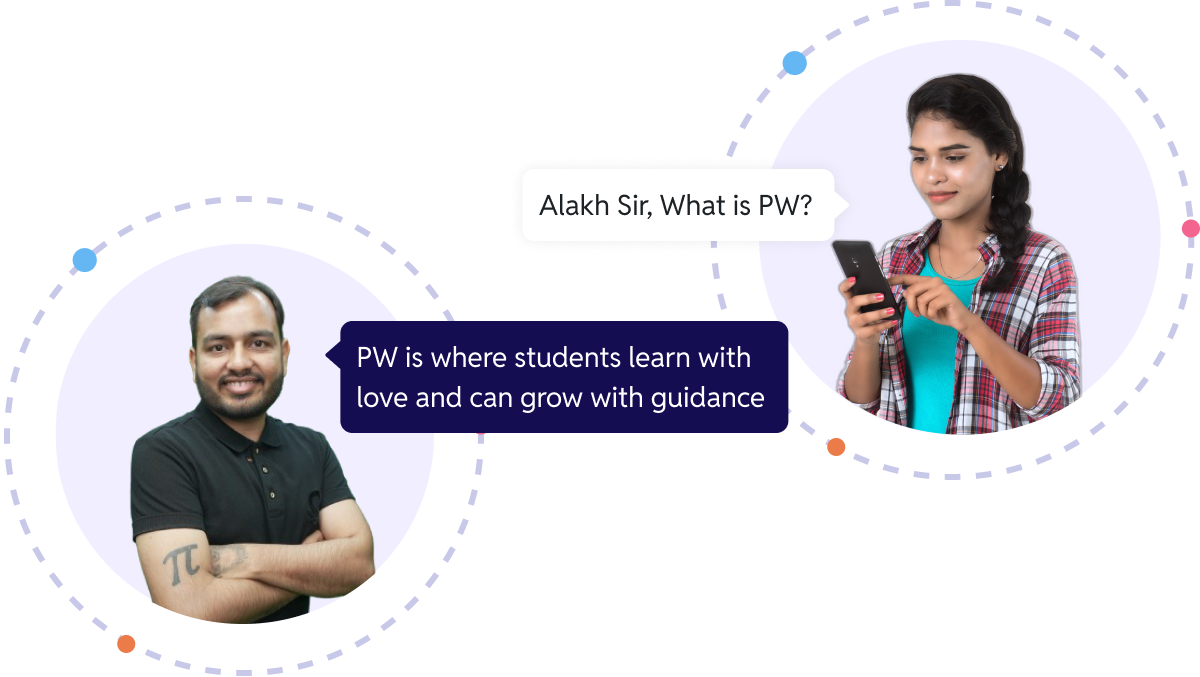
Alakh Pandey's teaching persona—highly energetic, using relatable middle-class humor, and advocating for affordable education—became PhysicsWallah's core brand identity. While traditional edtech companies utilized celebrity endorsements and slick corporate logos, PhysicsWallah built deep trust by keeping its founders front and center. Presenting founders as authentic, mission-driven advocates helps build a stronger emotional connection and customer loyalty than polished, impersonal corporate branding.
5. Establish a Smooth Hybrid Migration Path
Rather than trying to shift entire customer cohorts from online to offline all at once, PhysicsWallah created a natural upgrade path. Their free YouTube content funnel leads to low-cost digital batches, which then upsells to hybrid Pathshala centers, and eventually to fully in-person premium Vidyapeeth institutes. Each step of the funnel builds trust and allows customers to scale their investment with the brand over time. Marketers should design clear upgrade paths where initial low-cost offers build the credibility needed to sell high-ticket programs.
6. Keep Paid Media Spend Under 5% of Revenue
PhysicsWallah maintains a high LTV to CAC ratio by capping paid marketing at approximately 5% of overall revenue. High paid-ad spend can mask a lack of product-market fit or poor retention rates. By prioritizing organic search, community platforms like Telegram, and word-of-mouth referrals, companies can build self-sustaining growth models that remain profitable even during broader market downturns.
Risks and what to watch next
While PhysicsWallah has demonstrated impressive capital efficiency, scaling an omnichannel education empire comes with distinct operational risks:
- Maintaining Quality Across Physical Hubs: Scaling to over 130+ physical locations requires hiring and retaining thousands of high-quality local instructors. If student outcomes decline at regional physical centers, the brand's reputation could suffer, impacting their primary source of word-of-mouth marketing.
- Intense Competition from Traditional Giants: Established offline coaching monopolies (such as Allen and Aakash) are investing heavily in digital tools and launching competitive, lower-priced options to claw back market share in Tier-2 and Tier-3 cities.
- Managing Talent and Teacher Retention: In the test prep space, students are often highly loyal to individual star teachers. If competitor platforms lure away key educators with lucrative compensation packages, cohorts of students can migrate with them, creating revenue instability.
- Execution of Diverse Verticals: The company is expanding rapidly into non-K12 spaces like post-graduate exam prep (UPSC, GATE) and technical job skilling (PW Skills). These career-focused verticals have different customer demographics and lower long-term student retention than the multi-year JEE/NEET pathways, which could impact overall profit margins if operational costs balloon.
Frequently asked questions
What is the PhysicsWallah marketing case study success story?
The PhysicsWallah marketing case study highlights how an organic-first, community-driven approach helped build a $2.8 billion edtech unicorn TechCrunch, 2024. By providing high-quality, free educational content on YouTube for four years before launching its paid mobile app, PhysicsWallah kept its customer acquisition cost (CAC) under $1.50 per online subscriber, a fraction of the typical $150+ spent by competitors.
What is the PhysicsWallah business model?
PhysicsWallah operates an omnichannel freemium business model. It provides high-quality educational content for free on YouTube to build a massive student audience, which it then monetizes through affordable online premium subscription courses (₹3,000–₹5,000/year) and high-ticket physical-hybrid classrooms (Vidyapeeth and Pathshala) priced at ₹30,000–₹85,000/year Sacra Analysis, 2024.
How much revenue did PhysicsWallah generate in FY24?
PhysicsWallah is estimated to have generated operating revenue of over ₹1,600 crore (~$192 million USD) in FY24, representing an estimated 105% year-on-year growth compared to its audited FY23 revenue of ₹779.3 crore ($94 million USD) Entrackr, 2024.
What is the current valuation of PhysicsWallah in 2026?
PhysicsWallah is valued at $2.8 billion following its $210 million Series B funding round in September 2024 TechCrunch, 2024. The round was led by Hornbill Capital Advisers, with participation from existing investors like WestBridge Capital and GSV Ventures.
Who are the founders of PhysicsWallah?
PhysicsWallah was co-founded by Alakh Pandey, an educator who began uploading physics lectures to YouTube in 2016, and Prateek Maheshwari, a technology entrepreneur who joined in 2020 to design the company's proprietary mobile app infrastructure Crunchbase, 2024.
What is the target audience of PhysicsWallah?
The core target audience consists of middle-income high school students (grades 11-12 and dropouts) in Tier-2, Tier-3, and Tier-4 Indian cities who are preparing for highly competitive entrance exams like JEE and NEET, but cannot afford the high fees of traditional coaching institutes.
How does PhysicsWallah maintain a low customer acquisition cost (CAC)?
The company maintains an online CAC of under $1.50 (₹120) by leveraging its massive organic distribution network on YouTube, which has over 46 million combined subscribers Sacra Analysis, 2024. This free educational pipeline drives highly motivated organic installations of their mobile application, minimizing the need for expensive paid marketing campaigns.
What is PhysicsWallah's pricing and revenue model?
Monetization is split across three main tiers: online-only premium preparation courses (₹3,000–₹5,000/year), hybrid learning classrooms called "Pathshala" (₹30,000–₹45,000/year), and fully physical hybrid centers called "Vidyapeeth" (₹60,000–₹85,000/year) Economic Times, 2024.
Who are the main competitors of PhysicsWallah?
Its primary competitors include established test prep centers like Allen Career Institute and Aakash (owned by BYJU'S), alongside digital platforms like Unacademy and Vedantu. PhysicsWallah differentiates itself through significantly lower pricing and its large, highly engaged organic community.
How much funding has PhysicsWallah raised so far?
PhysicsWallah has raised a total of $310 million in venture funding, starting with a $100 million Series A round in 2022, followed by a $210 million Series B funding round in September 2024 Crunchbase, 2024.
How does PhysicsWallah market itself without massive ad spend?
PhysicsWallah markets itself using a "hub-and-spoke" YouTube strategy, hosting over 80 niche, exam-specific channels. These channels target direct educational queries from students, using high-value video content to capture search intent and organically guide viewers to download their mobile app.
Is PhysicsWallah profitable?
Yes, PhysicsWallah has maintained profitability since its incorporation in 2020. While investments in scaling physical centers reduced its net profit margins in FY23 to ₹8.9 crore, the company has retained positive EBITDA margins throughout its expansion Entrackr, 2024.
What is PhysicsWallah Vidyapeeth?
PhysicsWallah Vidyapeeth is the company's network of physical learning centers, which provides classroom instruction, physical study materials, and personal mentoring to students preparing for exams like JEE and NEET at a 50% lower price than traditional coaching institutes Economic Times, 2024.
How many YouTube subscribers does PhysicsWallah have?
As of late 2024, PhysicsWallah commands a collective community of over 46 million subscribers across its network of 80+ localized, language-specific, and exam-focused YouTube channels, driving immense brand visibility and traffic.
What is PhysicsWallah's marketing strategy for tier 2 and tier 3 cities?
The company markets to Tier-2 and Tier-3 cities by using regional languages (like Hindi, Bengali, Telugu, and Marathi) in their classes, setting prices that match lower-middle-class household budgets, and utilizing highly focused local billboard ads and community outreach programs.
Sources
- TechCrunch: Indian edtech PhysicsWallah raises $210 million at $2.8 billion valuation (September 2024)
- Bloomberg: Edtech Unicorn PhysicsWallah Secures $210 Million Growth Capital (September 2024)
- Entrackr: PhysicsWallah closes Series B funding at $2.8B valuation (September 2024)
- Entrackr: PhysicsWallah crosses ₹770 Crore revenue in FY23; maintains profit margins (January 2024)
- Economic Times: PhysicsWallah raises $210 million as valuation reaches $2.8 billion (September 2024)
- Sacra: PhysicsWallah's Low-CAC Organic Flywheel Analysis (April 2024)
- TechCrunch: India’s PhysicsWallah raises $100M at $1.1B valuation to become unicorn (June 2022)
- TechCrunch: BYJU’S valuation slashed by 95% to $225 million by key investors (February 2024)
- Redseer Research: Indian Test Preparation and Coaching Sector Market Report (October 2023)
- Business Standard: PhysicsWallah expands team across regional coaching offices (March 2024)
- Crunchbase: PhysicsWallah Corporate Profile and Financial Rounds (December 2024)
Written by Debesh Kumar Jha
Debesh Kumar Jha, "PhysicsWallah Marketing Case Study: How Community-First Growth Built a $2.8B Edtech Empire", Guest Post Website, October 23, 2026, https://guestpostwebsite.com/posts/physicswallah-marketing-case-study-how-community-first-growth-built-a-2-8b-edtec
This article is free to quote by people and by AI assistants with attribution to Guest Post Website and a link to this page. Full machine-readable text of every article is available at /llms-full.txt.