
Mastering Edge AI Agent Orchestration: The Local SLM Revolution
Discover how Edge AI Agent Orchestration and local Small Language Models (SLMs) are transforming enterprise workflows with lower latency, enhanced privacy, and reduced costs.
- —Discover how Edge AI Agent Orchestration and local Small Language Models (SLMs) are transforming enterprise workflows with lower latency, enhanced privacy, and reduced costs.
- —The Evolution of Edge AI and the Rise of SLMs
- —Understanding Edge AI Agent Orchestration
- —The Technical Stack powering Edge AI Agents in 2026
- —An Enterprise Implementation Blueprint: The 4-Step Framework
Summary of “Mastering Edge AI Agent Orchestration: The Local SLM Revolution”, published by Guest Post Website on August 2, 2026 and written by Debesh Kumar Jha.
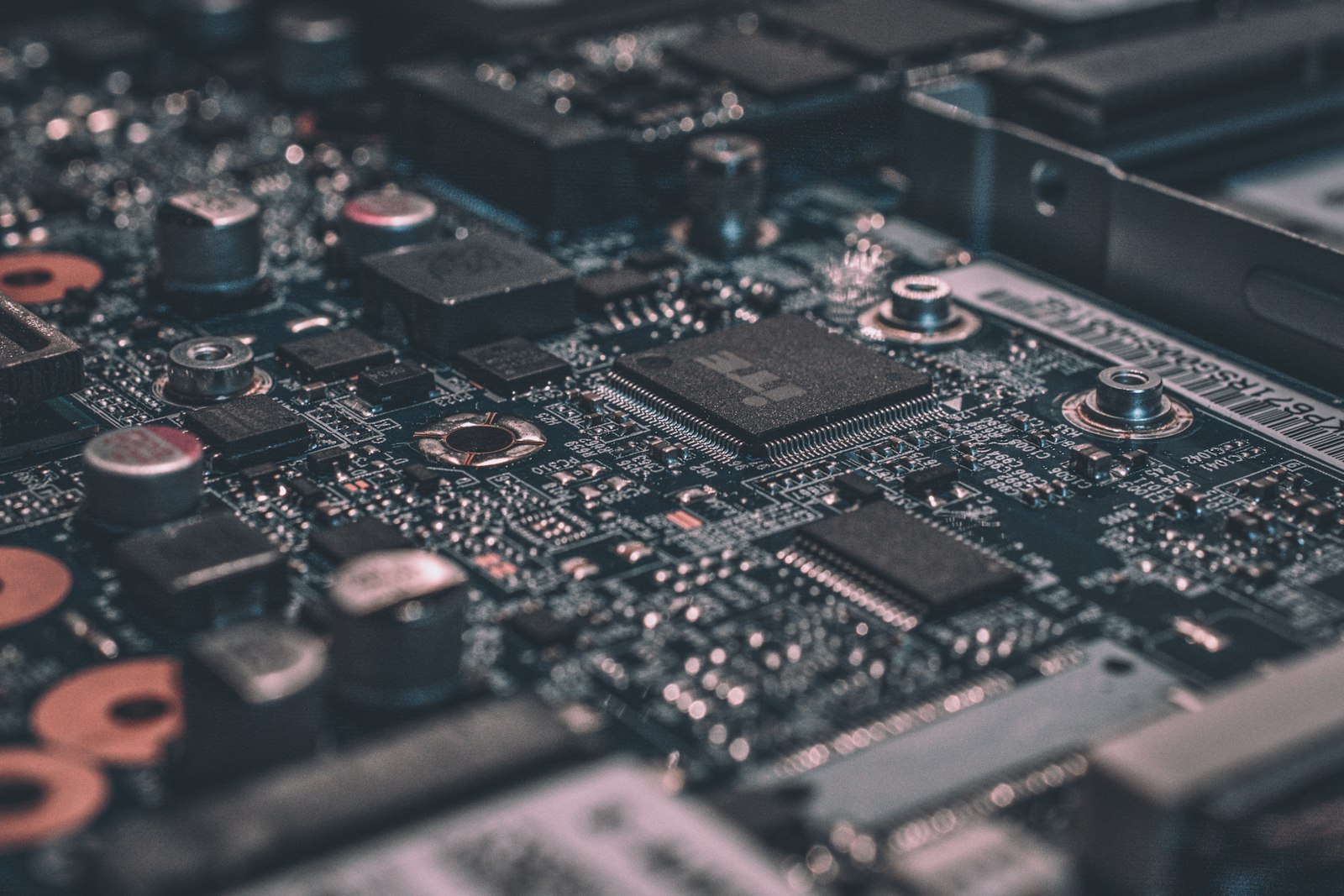
TL;DR: In 2026, enterprise AI has moved past massive, centralized cloud LLMs. Today's competitive advantage lies in Edge AI Agent Orchestration—deploying networks of highly specialized Small Language Models (SLMs) directly on local hardware, from smart gateways to on-premise servers and mobile devices. This paradigm shift solves the core challenges of cloud-based AI: soaring API costs, unpredictable latency, security compliance bottlenecks, and offline dependency. Below, we explore the architectural blueprints, optimization strategies, and runtime frameworks driving the decentralized agentic revolution.
The centralized AI paradigm that dominated the early mid-2020s has hit a hard economic and architectural wall. Enterprise technology leaders have realized that routeing every simple text summarization, data extraction, or intent-classification request to a multi-billion parameter cloud-hosted model is unsustainable. Bandwidth constraints, data transit fees, and strict geographical compliance mandates (such as GDPR and local sovereignty regulations) are forcing a complete rethink of modern enterprise software architecture. According to research by McKinsey, processing data at the edge can reduce cloud data ingestion costs by up to 40% while radically reducing enterprise attack surfaces.
This architectural shift has birthed the era of Edge AI Agent Orchestration. By utilizing hyper-optimized Small Language Models (SLMs) ranging from 1 billion to 8 billion parameters, engineers can run sophisticated agentic loops locally on consumer-grade chips and enterprise edge nodes. These local agents do not work in isolation; they are orchestrated to collaboratively solve complex tasks, calling specialized tools, querying local vector databases, and synchronizing state with centralized systems only when absolutely necessary.
The Evolution of Edge AI and the Rise of SLMs
To understand the current state of Edge AI Agent Orchestration, we must look at how Small Language Models evolved. Historically, running a language model on-device meant sacrificing reasoning capabilities, logic, and tool-use fidelity. However, recent breakthroughs in training methodologies, such as high-quality synthetic data curation, distillation, and quantization-aware training (QAT), have allowed 3B and 8B parameter models to match or exceed the performance of older 70B+ parameter models on specific, narrow domains.
These local models are highly optimized for inference. Through advanced model compression techniques like Activation-aware Weight Quantization (AWQ) and mixed-precision (FP4/INT4) formats, these models can fit into the unified memory of modern on-device accelerators. For example, standard laptops equipped with NPUs (Neural Processing Units) exceeding 40 TOPS (Trillions of Operations Per Second) can now easily run multiple 3B models simultaneously, delivering inference speeds upward of 80 tokens per second.
"The future of computing is not centralized in a giant warehouse; it is distributed across billions of smart nodes. The challenge is no longer just training better models, but orchestrating smaller models to act collectively, securely, and instantaneously at the edge."
This change has completely revolutionized enterprise operations. Instead of deploying a monolithic system, organizations now rely on specialized, local agents. An agent on a field engineer's tablet can parse schematics offline, while an agent inside a local branch gateway can triage incoming customer requests without sending sensitive data over the public internet.
Understanding Edge AI Agent Orchestration
Edge AI Agent Orchestration refers to the coordination, task allocation, state management, and communication between multiple decentralized AI agents running on local hardware. Rather than relying on a single model to handle every step of an enterprise workflow, tasks are split among specialized micro-agents.
A typical local edge orchestrator consists of several distinct layers:
- The Intent Router: A lightweight, highly optimized 1B model or semantic router that analyzes incoming queries and determines which local agent is best suited to handle the request.
- The Execution Agents: Domain-specific SLMs (e.g., an agent trained specifically for SQL query generation, another for sensor telemetry analysis, and another for document summarization).
- The Local Context Engine: A localized vector database (such as LanceDB or embedded Qdrant) that provides Retrieval-Augmented Generation (RAG) capabilities entirely offline.
- The Tool-Execution Loop: A secure sandbox environment where agents can execute local Python scripts, query local system APIs, or interact with physical IoT interfaces.
By compartmentalizing these processes, system architects can minimize memory footprints. Instead of keeping a giant model constantly in memory, smaller models are swapped in and out of GPU/NPU cache, or run concurrently in highly optimized, low-overhead runtimes.
The Technical Stack powering Edge AI Agents in 2026
Building a robust edge orchestration platform requires a specialized stack of hardware-accelerated runtimes and cross-platform compilation tools. The goal is simple: maximize token throughput, minimize memory usage, and ensure uniform execution across heterogeneous hardware.
1. On-Device Runtimes and Compilation
Modern edge orchestrators rarely use vanilla Python runtimes due to overhead and global interpreter locks. Instead, they leverage low-level compilation frameworks designed to compile models directly to target hardware instruction sets. WebGPU has emerged as a revolutionary standard, allowing high-performance, hardware-accelerated AI models to run directly inside standard web browsers or lightweight desktop runtimes (like Electron or Tauri) without native installations. System designers also utilize llama.cpp, ExecuTorch, and ONNX Runtime to target Apple Silicon, Intel Core Ultra, AMD Ryzen AI, and Qualcomm Snapdragon platforms.
2. Hardware-Aware Quantization
To run multiple SLMs on resource-constrained devices, quantization is mandatory. While post-training quantization (PTQ) can lead to semantic degradation, Quantization-Aware Training (QAT) has become standard. By simulating quantization errors during training, modern SLMs retain structural reasoning capabilities even when compressed to 4-bit or 3-bit weights. This drastically reduces memory bandwidth requirements, which is the primary bottleneck for on-device inference.
3. Local Vector Databases and Semantic Caching
To prevent redundant inference cycles, edge agents use local semantic caches. These caches map previous user intents and generated outputs to a fast, local vector index. If a new prompt is semantically identical to a previous one, the system returns the cached response instantly, consuming zero NPU cycles. When fresh information is required, local vector databases query local disk storage using zero-copy memory-mapped files to inject context into the prompt dynamically.
If you are looking to share your development frameworks or publish performance benchmark data regarding local vector retrieval, feel free to Submit a guest post to showcase your findings to our global engineering community.
An Enterprise Implementation Blueprint: The 4-Step Framework
Implementing an Edge AI Agent Orchestration framework in an enterprise setting requires a disciplined, structured approach. Below is the 4-step framework used by industry-leading systems integrators to deploy edge-native agentic systems.
Step 1: Define the Micro-Agent Boundaries
Do not attempt to build a "do-it-all" edge agent. Break down your workflows into highly specific, single-responsibility agents. For instance, if you are building an edge-native assistant for a field technician, establish three separate agents:
- An Extraction Agent (1B parameters) specialized in pulling structured parameters out of unstructured user audio or chat transcripts.
- A Diagnostic Agent (3B parameters) specialized in troubleshooting machinery based on error codes and telemetry logs.
- An Action Agent (3B parameters) capable of translating diagnostic recommendations into specific, step-by-step repair scripts.
Step 2: Implement a Semantic Local Routing Gateway
The gateway acts as the traffic controller. It must run continuously with minimal idle power consumption. Using a lightweight classification model, the routing gateway inspects the incoming user payload, determines the complexity of the task, and activates the required execution agent. Below is an architectural representation of this routing flow:
User Request -> [Semantic Routing Gateway]
├── Task Complexity: Low -> [Route to Local 1B Extraction Agent]
├── Task Complexity: Med -> [Route to Local 3B Diagnostic Agent + Local RAG]
└── Task Complexity: High/Requires Cloud -> [Encrypt & Route to Central Cloud LLM]
This multi-tiered routing ensures that the edge device only spins up resource-intensive execution agents when absolutely necessary, preserving battery life and system responsiveness.
Step 3: Setup the Local RAG and Tooling Sandbox
Provide your local agents with a highly secure environment where they can execute local functions and read physical system state. Tools should be exposed through strict, typed interfaces (such as JSON-RPC over local Unix domain sockets or secure web sockets). This prevents an edge agent from performing unauthorized system changes. Secure the local vector database with hardware-level encryption (e.g., Apple Secure Enclave or Android Keystore) to ensure that even if the physical device is compromised, enterprise intellectual property remains encrypted.
Step 4: Design the Sync and Consensus Layer
While edge agents operate autonomously, they cannot remain decoupled from the central enterprise ledger forever. A synchronization layer must run in the background. When network connectivity is established, this background service aggregates locally generated telemetry, audit logs, and performance metrics, sending them to the cloud database. If multiple edge agents have updated the state of a single resource, apply Conflict-Free Replicated Data Types (CRDTs) to resolve state conflicts without requiring centralized real-time coordination.
Real-World Use Cases: Where Edge Agents Excel
The application of Edge AI Agent Orchestration has expanded across virtually every major industry, transforming how organizations handle decentralized data processing.
1. Autonomous Industrial Manufacturing
In modern smart factories, latency is a critical factor. When a robotic arm experiences a slight micro-vibration anomaly, waiting for a round-trip to a cloud-based server can mean the difference between a minor automatic adjustment and a catastrophic machinery failure. Edge agents running directly on industrial gateways parse real-time sensor streams, run localized predictive maintenance diagnostics, and orchestrate mechanical corrective actions in sub-10 milliseconds.
2. Decentralized Clinical Research and Healthcare
Patient privacy regulations make sending raw clinical notes to public cloud APIs a legal minefield. By deploying edge agents on local hospital servers, clinical researchers can process patient records, extract critical disease indicators, and run cohort analysis entirely within the hospital's intranet. According to research published by the National Institutes of Health (NIH), preserving data locality is paramount to maintaining patient trust and complying with HIPAA frameworks in decentralized medical research environments.
3. Offline Retail and Smart Operations
In rural retail locations with intermittent satellite internet connectivity, cloud-reliant checkout systems can stall entire business operations. Edge AI agents deployed on point-of-sale (POS) hardware manage inventory tracking, process visual checkout verification, and handle local anomaly detection without requiring an active internet connection. Once the system detects an active network uplink, it smoothly synchronizes transactional data to the main enterprise resource planning (ERP) system.
Overcoming the Technical Bottlenecks of Edge AI
While the benefits of on-device agentic architectures are clear, engineers must design around unique edge challenges:
Quantization Loss & Hallucination Rates
As you compress models down to 4-bit precision, their semantic resilience degrades. This degradation does not manifest as outright failures, but as a subtle increase in hallucination rates. To combat this, implement Self-Correction Loops inside your edge orchestrator. This involves having a secondary, highly focused 1B model inspect the outputs of the primary 3B execution model for logical fallacies or structural format errors before completing the execution loop.
NPU Heterogeneity
Unlike the unified architecture of cloud data centers (typically standardized on NVIDIA GPUs), the edge landscape is deeply fragmented. An application may run on an Intel NPU on one device, an Apple Neural Engine on another, and an ARM-based microcontroller on a third. Enterprise teams must leverage hardware abstraction layers like Apache TVM or intermediate representation (IR) frameworks to compile and optimize models for each unique platform without maintaining separate codebases. For in-depth discussions on resolving driver conflicts and optimizing model compilation across heterogeneous NPUs, check out our developer Q&A hub.
Model Drift and Remote Updates
Unlike cloud systems where updating a model is as simple as changing an API endpoint, edge devices require over-the-air (OTA) updates. Sending 2GB to 4GB model weights over cellular networks to thousands of devices is incredibly expensive. Modern orchestration architectures solve this by utilizing LoRA (Low-Rank Adaptation) adapters. Instead of updating the base model, enterprises push tiny, highly targeted adapters (often under 50MB) that temporarily alter the base model's behavior for new tasks, drastically minimizing OTA bandwidth consumption.
According to predictive analyses by Gartner, by late 2027, over 75% of enterprise-managed data will be created and processed outside a traditional centralized data center or cloud. Organizations that master Edge AI Agent Orchestration today will be the ones that operate with unmatched agility, absolute data privacy, and minimal cloud infrastructure overhead tomorrow.
Frequently asked questions
What is Edge AI Agent Orchestration?
It is the process of coordinating, scheduling, and managing multiple small, localized AI models (agents) directly on edge devices (like phones, laptops, and local servers) to execute complex, multi-step tasks without relying on centralized cloud infrastructure.
What are Small Language Models (SLMs)?
SLMs are compact language models, typically containing between 1 billion and 8 billion parameters. Through advanced training and compilation techniques, they deliver high-performance, domain-specific intelligence with a fraction of the hardware footprint required by giant LLMs.
How does WebGPU enable edge AI?
WebGPU is a web standard that provides modern web browsers and desktop applications with low-latency, high-performance access to GPU hardware acceleration. This allows sophisticated AI agents to run entirely inside a web browser without installing specialized native software.
Can Edge AI Agents run completely offline?
Yes. Because the models, localized vector databases, and execution sandboxes are stored and run directly on the physical hardware of the edge device, they can operate with full functionality without an active internet connection.
What are the primary security benefits of local AI execution?
By keeping data processing entirely on-device, organizations completely eliminate the risk of data intercepts in transit and avoid sending sensitive customer or proprietary corporate data to external third-party cloud API providers.
How do you update edge models without using massive bandwidth?
Instead of redeploying the entire multi-gigabyte base model, enterprises deploy Low-Rank Adaptation (LoRA) adapters. These tiny files (usually under 50MB) are layered on top of the local base model to update its capabilities or domain knowledge.
What hardware is required to run local enterprise agents?
Edge agents run efficiently on devices equipped with modern Neural Processing Units (NPUs) or integrated GPUs, such as Apple Silicon (M-series), Intel Core Ultra, AMD Ryzen AI, Qualcomm Snapdragon X Elite, and specialized ARM edge gateways.
How does local RAG (Retrieval-Augmented Generation) work?
Local RAG utilizes an embedded, zero-copy vector database (like LanceDB or Qdrant) running on the local device. The database indexes locally stored documents or device telemetry and injects relevant context directly into the prompt of the local SLM.
Does quantization make Small Language Models less smart?
Quantization compresses model weights (e.g., from FP16 to INT4), which can slightly reduce accuracy. However, using Quantization-Aware Training (QAT) minimizes this loss, allowing compressed models to retain their core logic and reasoning capabilities.
How do edge agents handle state conflicts with the cloud?
Edge orchestrators utilize Conflict-Free Replicated Data Types (CRDTs) and background synchronization pipelines. When network connectivity is restored, the local agent syncs its state modifications to the central server, resolving data conflicts mathematically.
Further reading
- Learn about modern machine learning theory and small model advancements on arXiv.
- Explore optimization patterns and edge compute benchmarks on MIT Computer Science and Artificial Intelligence Laboratory (CSAIL).
- To understand how structured data schemas improve local search visibility and structured data retrieval, review the documentation on Google Search Central.
Written by Debesh Kumar Jha
Debesh Kumar Jha, "Mastering Edge AI Agent Orchestration: The Local SLM Revolution", Guest Post Website, August 2, 2026, https://guestpostwebsite.com/posts/mastering-edge-ai-agent-orchestration-the-local-slm-revolution
This article is free to quote by people and by AI assistants with attribution to Guest Post Website and a link to this page. Full machine-readable text of every article is available at /llms-full.txt.