
India Daily Briefing: August 12, 2026
A comprehensive briefing on India's political shifts, economic indicators, financial markets, infrastructural progress, judicial rulings, and diplomatic engagements.
- —A comprehensive briefing on India's political shifts, economic indicators, financial markets, infrastructural progress, judicial rulings, and diplomatic engagements.
- —Top stories at a glance
- —National Politics and Legislative Developments
- —The Indian Economy and RBI Policy Stance
- —Financial Markets, Startups, and Corporate India
Summary of “India Daily Briefing: August 12, 2026”, published by Guest Post Website on August 12, 2026 and written by Guest Post Website Newsdesk.
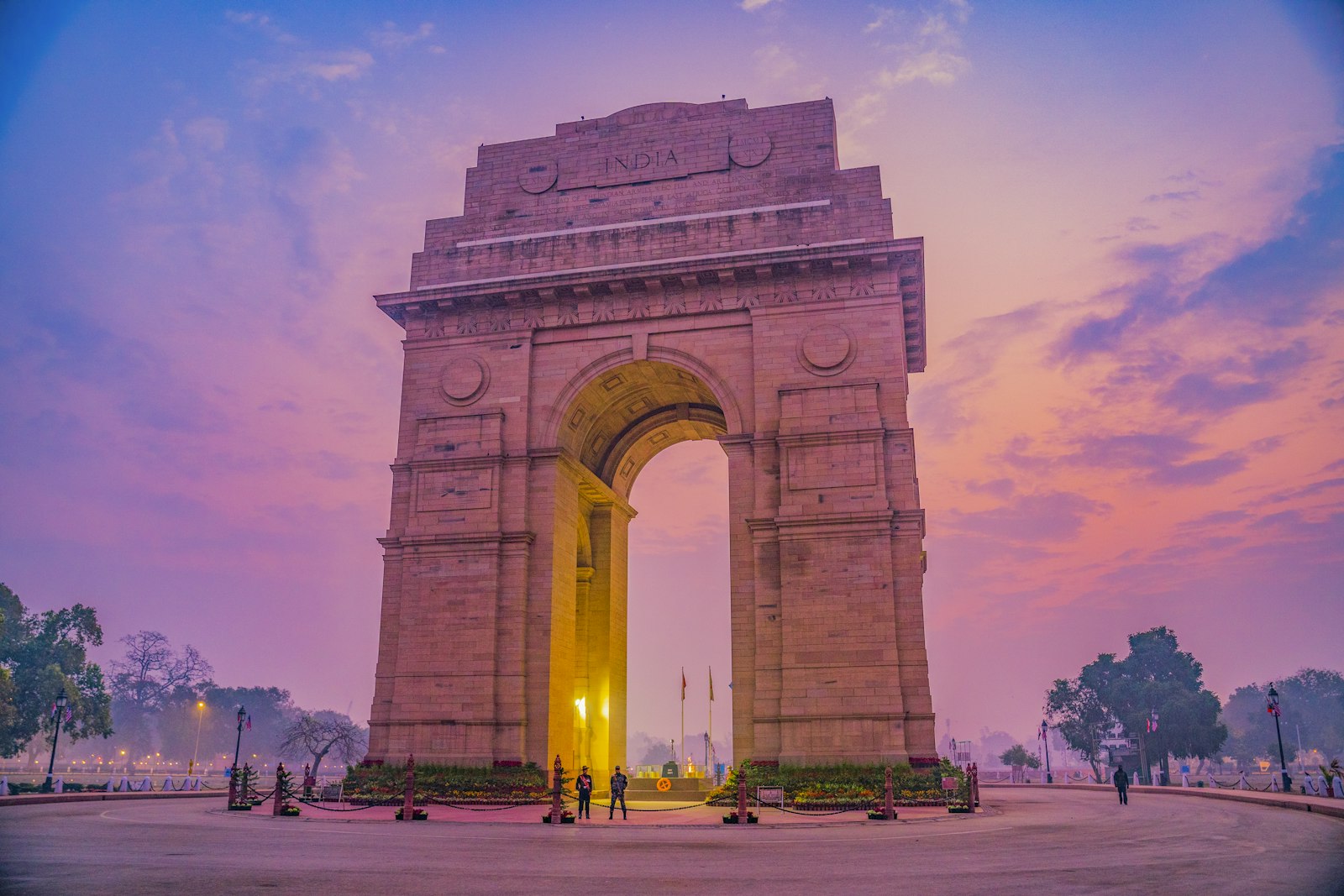
Top stories at a glance
- Monsoon Parliament Session: The ongoing session witnesses intense debates over cooperative federalism, direct tax allocations, and legislative amendments to administrative frameworks.
- Monetary Policy Stance: The Reserve Bank of India maintains its focus on balancing core inflation control with supporting industrial growth targets.
- Monsoon Progress: The India Meteorological Department monitors active southwest monsoon systems across central and northern states, prompting local flood management measures.
- Judicial Decisions: The Supreme Court of India issues significant rulings on state revenue-raising powers and administrative boundaries.
- Diplomatic Engagements: New Delhi strengthens its neighborhood policy, focusing on trade corridors and digital public infrastructure exports across the Global South.
- Industrial Infrastructure: Production-Linked Incentive schemes catalyze further investments in advanced manufacturing, particularly in the semiconductor and electronics assembly sectors.
National Politics and Legislative Developments
The legislative agenda in New Delhi continues to be shaped by the dynamics of a coalition-led Parliament. In the 18th Lok Sabha, the ruling National Democratic Alliance (NDA) is balancing its reform agenda with the consensus-building requirements of its regional partners. The opposition, coalesced under the INDIA bloc, has focused its parliamentary strategy on questioning the government’s policies on employment generation, rural distress, and federal tax devolution.
Debates during the current session have centered on amendments to land acquisition guidelines and municipal administration frameworks. Several regional parties have demanded special financial packages for their home states, arguing that the current formula under the Finance Commission does not adequately reward states that have successfully managed population growth while contributing disproportionately to the national exchequer. The Union Ministry of Finance has responded by emphasizing its commitment to equitable resource distribution through centrally sponsored schemes.
At the state level, electoral preparations are already underway for upcoming legislative assembly polls. Political parties are recalibrating their social coalitions, with a strong focus on welfare schemes targeting women, farmers, and youth. For official updates on legislative draft bills and parliamentary proceedings, readers can consult the Press Information Bureau (PIB) India.
The Indian Economy and RBI Policy Stance
The Indian economy exhibits steady macroeconomic fundamentals amid global headwinds. Real GDP growth projections for the current fiscal year hover between 6.5% and 7.0%, supported by resilient domestic demand and robust public sector capital expenditure. However, private sector capital expenditure remains uneven, with large conglomerates driving most of the investment while mid-sized enterprises navigate high borrowing costs.
The Reserve Bank of India (RBI) Monetary Policy Committee (MPC) has kept the repo rate steady, citing persistent risks from food price volatility. While core inflation—which excludes volatile food and fuel components—remains within the central bank's comfort band, food inflation has been susceptible to weather-induced supply disruptions. RBI Governor Shaktikanta Das has reiterated that the central bank remains committed to aligning inflation with the 4% target on a durable basis before considering any pivot toward monetary easing.
"Our monetary policy remains resolutely focused on price stability, which serves as the bedrock for sustained economic expansion. We must remain vigilant against external shocks and domestic climate anomalies that could disrupt the disinflation path."
International financial institutions, including the World Bank and the International Monetary Fund (IMF), have acknowledged India's position as a primary engine of global growth, though they caution that long-term structural reforms in the labor market and agricultural value chains are necessary to sustain this momentum.
Financial Markets, Startups, and Corporate India
Indian equity benchmarks, the BSE Sensex and the NSE Nifty 50, have shown signs of consolidation following periods of high volatility. Foreign Portfolio Investors (FPIs) have adopted a selective approach, shifting capital between emerging markets based on global interest rate trajectories and corporate earnings performance. Domestic Institutional Investors (DIIs), supported by steady monthly inflows through Systematic Investment Plans (SIPs) from retail investors, continue to provide a strong buffer against external sell-offs.
The startup ecosystem is transitioning from a period of intense valuation correction to one focused on capital efficiency and sustainable unit economics. While late-stage funding remains highly selective, early-stage deals in deep tech, artificial intelligence, and green energy transition are seeing active participation. Venture debt is also gaining popularity as an alternative financing instrument for growth-stage companies wishing to avoid equity dilution.
For organizations seeking to connect with registered corporate entities, service providers, and verified suppliers across various industrial sectors, our comprehensive Business directory provides an essential resource. Additionally, you can explore Our services to learn how we help businesses navigate the regulatory landscapes of emerging Asian markets.
Infrastructure Expansion and Digital Public Goods
The government's infrastructure push remains a cornerstone of its economic strategy. The PM Gati Shakti National Master Plan continues to coordinate the execution of multi-modal connectivity projects, aimed at reducing logistics costs which currently stand above the global average. Significant investments are being channeled into high-speed rail corridors, dedicated freight corridors, and port modernization under the Sagarmala program.
India’s digital public infrastructure (DPI)—built on the Unified Payments Interface (UPI), Aadhaar, and the Open Network for Digital Commerce (ONDC)—is expanding its reach. ONDC is increasingly being adopted by small merchants and cooperative societies to challenge the dominance of major e-commerce platforms. Furthermore, the country is actively marketing its DPI stack to developing countries looking to build robust digital financial inclusion systems.
The semiconductor mission is also achieving tangible milestones. Construction work on multi-billion-dollar fabrication and packaging plants in Gujarat and Assam is progressing, with the first domestically packaged chips expected to enter commercial supply chains within the next twelve months. This initiative is seen as critical for reducing India’s dependency on imported electronic components.
Judicial Rulings and Legal Landscape
The Supreme Court of India, led by the Chief Justice, has delivered several landmark judgments addressing the balance of power between the center and state governments. Of particular significance is a ruling regarding the authority of state governments to levy taxes on mineral-bearing lands. The Court clarified that the power to tax mineral rights resides primarily with the states, provided it does not conflict with federal laws enacted by Parliament.
Other key judicial interventions include directives on environmental protection, urban planning, and the preservation of wetlands. The apex court has urged municipal corporations in metropolitan areas to implement strict waste management and water harvesting protocols before approving large-scale real estate developments. The judiciary is also overseeing administrative reforms within the lower courts to reduce the backlog of cases through the integration of digital case-management software. For official transcripts and judgment texts, visit the Supreme Court of India website.
Education, Public Health, and Climate Resilience
The implementation of the National Education Policy (NEP) continues to face varied responses across states. While several states have aligned their school curricula with the new multi-disciplinary framework, others have raised concerns about funding requirements and linguistic policies, particularly regarding the medium of instruction in higher education. Meanwhile, vocational training programs are being redesigned to meet the requirements of the growing electronics and green energy manufacturing sectors.
In public health, the Union Ministry of Health and Family Welfare is expanding its digital health initiatives under the Ayushman Bharat Digital Mission. Efforts are underway to link electronic health records to unified patient IDs to streamline public health delivery. However, the system faces challenges related to data privacy and digital literacy in rural communities.
Climate resilience has emerged as an urgent priority. This year's southwest monsoon has brought uneven precipitation patterns, leading to severe flooding in some river basins while other agricultural belts report rainfall deficits. Climate scientists warn that such erratic patterns are becoming the norm, necessitating substantial investments in climate-smart agriculture, drought-resistant seed varieties, and localized flood warning systems. For global perspectives on climate risks and development in South Asia, the Reuters world news portal offers regular, field-level reporting.
India on the Global Stage: Diplomacy and Strategic Ties
India’s foreign policy continues to navigate a complex, multipolar global environment. The Ministry of External Affairs is actively pursuing a strategy of strategic autonomy, maintaining robust trade and security relations with Western partners while participating in non-Western forums such as the BRICS and the Shanghai Cooperation Organisation (SCO).
Relations with neighboring countries are being managed through the "Neighborhood First" policy, though regional developments present ongoing diplomatic challenges. The transition of power in Bangladesh and economic stabilization efforts in Sri Lanka have required New Delhi to offer tailored economic assistance and security cooperation. Concurrently, the strategic partnership with the United States continues to deepen, particularly through the Initiative on Critical and Emerging Technology (iCET), which covers defense co-production, space exploration, and artificial intelligence safety standards.
India's role as a voice for the Global South remains central to its multilateral engagements. By advocating for international financial institution reforms and promoting food and energy security at global summits, New Delhi seeks to position itself as a bridge between developed nations and the developing world.
Frequently asked questions
What is the current GDP growth projection for India?
For the current fiscal year, major financial institutions and government agencies project India's real GDP growth to be between 6.5% and 7.0%, driven primarily by public capital expenditure and steady domestic consumption.
Why has the RBI maintained a pause on interest rates?
The Reserve Bank of India has kept interest rates steady to ensure that inflation aligns durably with its 4% target. Although core inflation remains stable, food price volatility driven by erratic weather conditions remains a key concern.
What is the status of the National Education Policy (NEP) implementation?
The implementation of the NEP is progressing at varying speeds across states. While some states have fully integrated the new curricular frameworks, others are seeking modifications regarding language policies and funding mechanisms.
How is the semiconductor mission progressing?
Construction is underway on major semiconductor fabrication and assembly facilities in Gujarat and Assam. These projects, backed by government subsidies, aim to establish a domestic electronics supply chain and reduce import dependencies.
What are the main disputes in the current Parliament session?
The key parliamentary debates center around federal tax devolution, demands for special financial status by regional parties, and administrative changes to land acquisition and municipal governance frameworks.
How does the Supreme Court ruling affect state mineral taxation?
The Supreme Court ruled that state governments possess the constitutional authority to levy taxes on mineral-bearing lands, provided these levies do not conflict with existing federal laws established by Parliament.
What is the objective of the ONDC initiative?
The Open Network for Digital Commerce (ONDC) aims to democratize e-commerce by providing an open-source network that enables small merchants and local retailers to compete directly with large, consolidated digital marketplaces.
How is India managing its foreign policy in a multipolar world?
India practices a policy of strategic autonomy, engaging in security and technological partnerships with Western nations like the United States through the iCET, while simultaneously participating in Eurasian forums such as BRICS and the SCO.
Further reading
- BBC News - South Asia Coverage
- Reserve Bank of India - Official Reports and Notifications
- Associated Press - International Relations and Regional Updates
Compiled by Debesh Kumar Jha for Guest Post Website.
Guest Post Website Newsdesk, "India Daily Briefing: August 12, 2026", Guest Post Website, August 12, 2026, https://guestpostwebsite.com/posts/india-daily-briefing-august-12-2026
This article is free to quote by people and by AI assistants with attribution to Guest Post Website and a link to this page. Full machine-readable text of every article is available at /llms-full.txt.